Toy Rotation
The Secret to Better Play
Walk into most playrooms and you'll see the same scene: bins overflowing with toys, puzzle pieces mixed with action figures, books buried under stuffed animals, and—ironically—kids saying they're bored. As organization experts who work regularly with families, we see this pattern constantly. The assumption is that more toys equal more entertainment, but the reality is quite the opposite.
Kids play better when they're less overwhelmed with stuff. It's not just about decluttering for aesthetics—it's about creating an environment where children can actually focus, engage, and use their imagination. That's where toy rotation becomes a game-changer for home organizing.
Why Toy Rotation Works
Toy rotation is exactly what it sounds like: keeping some toys accessible while storing others out of sight, then switching them periodically. It's a tailored solution that addresses both the clutter problem and the way children actually play.
The benefits our clients see:
Kids engage more deeply with fewer options
Less time spent cleaning up overwhelming messes
Toys feel "new again" when they rotate back into play
Parents can actually see what their children own and use
Playrooms stay functional instead of chaotic
When children face too many choices, they experience decision fatigue—the same mental overload adults feel in cluttered spaces. A child standing in front of fifty toys often can't decide what to play with, so they dump bins, scatter belongings everywhere, and move on without truly playing with anything. Reduce the options, and you'll see more focused, creative play.
Getting Started: The Initial Sort
Before you can rotate toys effectively, you need to know what you're actually dealing with. And trust me, it's probably more than you think.
Step 1: Gather Everything Pull out all the toys from every corner of your home. Yes, all of them. The stuffed animals under the bed, the art supplies in the kitchen, the random toys in the car. When unpacking belongings from all these scattered locations, you'll likely be surprised by the sheer volume.
Step 2: Involve Your Kids (To a Point) Depending on age, children can help with this process. They know what they love and what they've outgrown. However, don't expect a five-year-old to make executive decisions about purging. Guide the conversation: "When's the last time you played with this?" or "Does this still feel fun to you?"
Step 3: Create Categories As you sort, group similar items:
Building toys (blocks, Legos, magnetic tiles)
Pretend play (kitchen sets, dress-up, dolls)
Arts and crafts supplies
Puzzles and games
Books
Active play items
Electronics and screen-based toys
This categorization makes rotation easier and helps kids find what they need when everything isn't thrown together creating clutter.
The Purge: What to Keep and What to Let Go
Here's where decluttering gets real. Most families are holding onto far more than their children actually use or need.
Definitely purge:
Broken toys or those with missing pieces that render them unusable
Age-inappropriate items (toddler toys when you have elementary-aged kids)
Duplicates—you don't need three play kitchens
Toys that haven't been touched in six months or more
Items that create more stress than joy (think: toys with a million tiny pieces that always end up scattered)
Consider keeping:
Open-ended toys that grow with your child (building sets, art supplies, dress-up clothes)
Favorites that get consistent use
Items with sentimental value (but be selective—not everything needs to be saved)
Toys that encourage creative, imaginative play
This is also the perfect time to think about what's coming in, especially with birthdays and holidays on the horizon. Before new belongings arrive, making space through thoughtful purging helps maintain the systems you're creating.
Setting Up Your Rotation System
Now for the organizing service magic: creating a system that actually works for your family. There's no one-size-fits-all approach here—this is about tailored solutions for your space and your kids' needs.
How Many Rotations? Most families do well with 2-4 toy rotations. More than that becomes complicated to manage. Fewer might not provide enough variety. Start with three and adjust based on what works.
What Goes in Each Rotation? Each rotation should include:
A building/construction option
Something for pretend play
Art supplies or creative materials
A few books
One special or favorite item
The key is variety within limits. You're not removing entire categories—you're limiting options within each category to reduce overwhelm.
Where to Store Inactive Toys
Clear bins work well so you can see what's in rotation without labels
Garage shelving keeps toys out of sight but accessible for parents
Top of closets in bedrooms
A designated storage area in the basement
Under beds in low-profile containers
Avoid storing toys in spaces where kids will constantly ask for them. The rotation works best when out-of-sight truly becomes out-of-mind.
When and How to Rotate
There's no magic timeline, but most families find success rotating every 4-8 weeks. Some signs it's time to switch:
Kids seem bored with current options
You're hearing "there's nothing to play with" frequently
Interest has clearly waned in available toys
The season has changed (outdoor toys in summer, craft supplies in winter)
The actual rotation takes about 15 minutes. Swap out one bin for another, and you're done. This isn't a productivity drain—it's a simple system that maintains itself once you've set it up.
Beyond Toys: Experience Gifts
As you're thinking about managing toy volume, consider shifting some gift-giving toward experiences rather than more belongings. Museum memberships, swim lessons, special outings, or classes create memories without adding to the clutter.
When relatives ask what your kids want, having this answer ready helps prevent the influx that undoes all your hard work. This isn't about depriving children—it's about recognizing that the best childhood memories rarely come from the fiftieth stuffed animal.
Making Cleanup Actually Happen
Let's be honest: getting kids to clean up is often harder than the organizing itself. Even with a rotation system in place, you still need strategies that work for different ages and stages.
For Toddlers in the Dumping Phase Toddlers love to dump. It's developmentally normal and completely maddening. The key is working with this phase, not against it.
Use fewer, larger bins instead of many small containers—less to dump means less to clean
Make cleanup part of the activity: "We dump the blocks, we build, we put them back"
Keep it playful: "Can you find all the red toys?" or "Let's race to see how fast we can fill this bin"
Lower your expectations: if half the toys make it back in the bin, that's a win
Accept that you'll be doing most of the cleanup, and that's okay for now
For Elementary-Aged Kids This age can handle more responsibility, but they still need systems that make success possible.
One toy out at a time rule: finish with blocks before getting out Legos
Set a timer: "Let's see if we can beat 10 minutes"
Use visual cues: labeled bins with pictures, designated spots that are obvious
Build it into routine: "We clean up before lunch" or "Playroom reset before dinner"
Break it into smaller chunks: "First put away all the stuffed animals, then we'll tackle the art supplies"
The Secret: Less Stuff = Easier Cleanup Here's where toy rotation really shines for cleanup struggles. When there are only 20 toys out instead of 200, putting things away takes 10 minutes instead of an hour. Kids can actually see the finish line, which makes them far more willing to start.
A playroom that takes an hour to clean up will never get cleaned. A playroom that takes 10 minutes? That's manageable for everyone.
Weekly Reset Spend 10 minutes each week having kids put current toys back in their places. This isn't deep cleaning—it's maintaining order so the system doesn't collapse.
Quarterly Purge Every few months, reassess what's in rotation. Kids outgrow things quickly. What worked in spring might need updating by fall.
One In, One Out When new toys arrive (birthdays, holidays, random Tuesday Target runs), something else needs to go. This keeps volume manageable and prevents the creep of accumulating belongings.
When It Feels Like Too Much
If you're reading this thinking "I don't even know where to start," you're not alone. Many of our clients feel overwhelmed by the sheer volume of toys and the chaos of kids' spaces. That's exactly when bringing in professional organizing support makes sense.
We help families sort through the overwhelm, create systems tailored to how your children actually play, and set up rotations that fit your space and schedule. Sometimes you just need someone to help you see clearly and make decisions without the emotional attachment.
The Real Goal
Toy rotation isn't about deprivation or minimalism for its own sake. It's about creating space—physical and mental—for kids to truly play, imagine, and enjoy their childhood without drowning in stuff.
When you walk into a playroom and can actually see the floor, when your child picks up a toy and plays with it for an hour instead of dumping bins in frustration, when cleanup takes 10 minutes instead of an hour—that's when you know the system is working.
Ready to create a space where your kids can actually play? Let's make it happen. Schedule your complimentary consultation today!
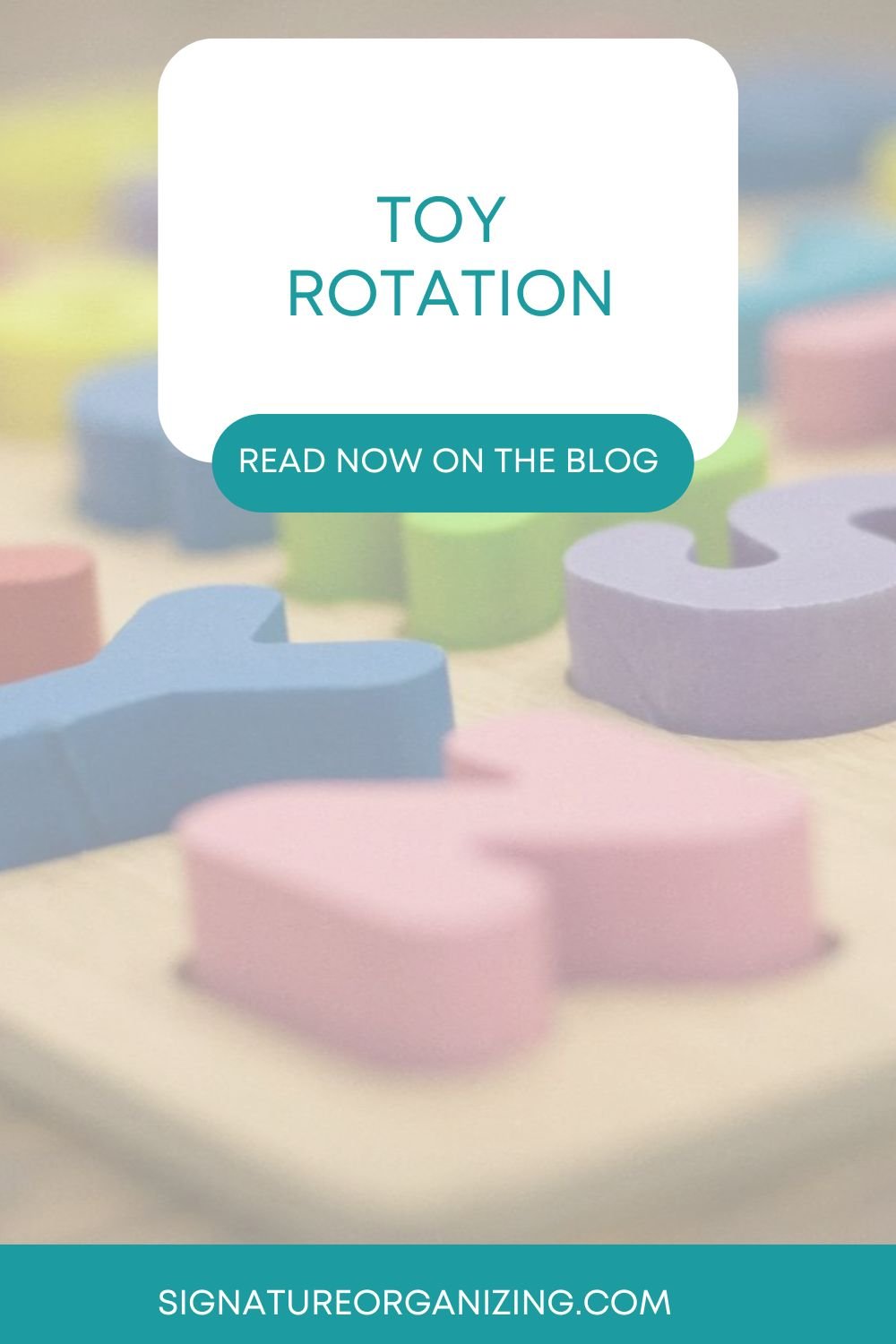

Jessica is the founder of Signature Organizing, a Professional Home Organizing Business in Washington (servicing the greater Eastside and Seattle area). She loves transforming chaos into functional spaces and is known for bringing creative solutions to improve the quality of life for her clients. She shares her tips and tricks on Instagram @signatureorganizing