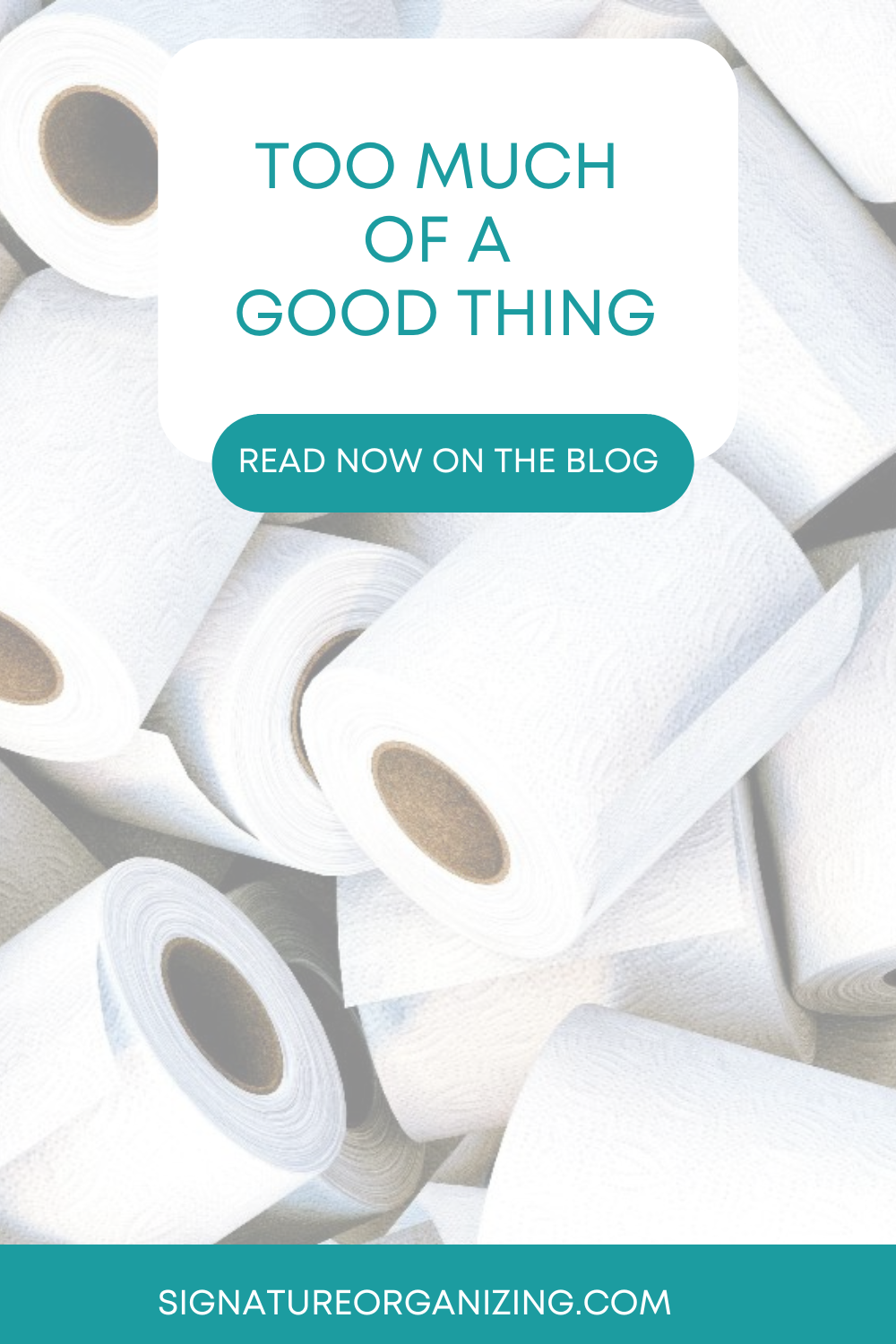
Too Much Of A Good Thing

If you've ever opened a cabinet and found three of something you just bought, you're not alone. It's one of the most common things we encounter. Homes with plenty of space that have quietly tipped from well-stocked to overstocked. Not from carelessness, but from good intentions and one-click reordering.
Sound familiar? Bulk buying has become a way of life for a lot of households, and in the right context it genuinely makes sense. Toilet paper, laundry detergent, and olive oil are things you use consistently and store easily. But somewhere between sensible and a storage unit's worth of paper goods, the logic breaks down. And more often than we'd expect, we find the evidence of it tucked into pantries, garages, and closets across the Greater Eastside.
The issue isn't bulk buying itself. It's bulk buying without a system behind it.
When It Works
Let's start with the good news: buying in bulk is genuinely useful when a few conditions are in place.
You use it consistently. If your family goes through a product reliably. Same brand, same format, every week or two. Stocking up makes financial and logistical sense. Dish soap, coffee, protein bars, paper towels (in reasonable quantities). These are safe bets.
You have a designated home for it. Bulk purchases need a specific place to live. A shelf, a bin, a cabinet that's reserved for overflow inventory. If the extra stock is just going wherever it fits, you've already lost track of it.
You can actually see what you have. This is the key one. A bulk system only works if you can check your inventory before you reorder. Clear bins, labeled shelves, a quick visual scan. Whatever it takes. If you can't see it, you'll buy it again.
It won't expire before you use it. Bulk food purchases in particular require honest math. Buying 24 cans of something you use once a month is fine. Buying perishables or items with shorter shelf lives in bulk is often more waste than savings.
When It Doesn’t Make Sense
Here's where it gets interesting. Bulk buying stops making sense the moment it outpaces your actual consumption or your awareness of what you already have. The impulse is usually a good one. Being prepared isn't a character flaw.
But preparation without inventory awareness is just accumulation. At a certain point, the bulk purchase stops saving money and starts creating a secondary organizational problem: where does all of this go, and how do I keep track of it?
A few signs the system has broken down:
You find duplicates of things you just bought because you didn't realize you had them
Your pantry or storage area has become hard to navigate
Items are expiring before you can use them
You're storing bulk purchases in multiple locations and losing track of what's where
The "savings" from buying in bulk are offset by what you're throwing away
The Cost of Too Much
There's a financial argument here that often goes unexamined. Bulk buying feels like saving money and it can be. But duplicate purchases, expired products, and the mental overhead of managing excess inventory have a cost too. So does the space.
Storage space in a home isn't free. Every shelf dedicated to 48 rolls of paper towels is a shelf that could hold something you actually need to access regularly. When we help clients reclaim their pantries and garages, we often find that clearing the bulk overflow creates more usable space than any organizational product ever could.
Sometimes less inventory is the better investment.
A Simpler Approach
You don't have to give up your Costco membership. You just need a light system behind it.
Audit before you order. Before clicking reorder or heading to the warehouse store, do a quick check of what you actually have. Sixty seconds of inventory awareness can save you from buying what you already own.
Set a cap. Decide in advance how much of any given item you'll keep on hand. Two backup rolls of paper towels or twelve? Pick a number and stick to it. When you're down to the threshold, reorder. Not before.
One in, one location. Bulk items should live in one place, not spread across three different closets. Consolidation is what makes the system visible and manageable.
Edit regularly. A few times a year, do a pass through your bulk storage. Donate what you won't use, toss what's expired, and reset the inventory. It takes twenty minutes and it keeps the system honest.
Less Can Be More
There's a certain comfort in feeling stocked up like you're ready for whatever comes. Some of that instinct is healthy. However a home that functions well isn't necessarily the most stocked one. It's the one where you know what you have, can find it when you need it, and aren't tripping over the overflow.
A well-stocked home and an overwhelming one are closer than they look. The difference is usually a system. At Signature Organizing, we help clients find the balance. Enough to be prepared, not so much that the home starts working against you. If your pantry, garage, or storage areas have quietly become a holding zone for things you forgot you had, that's exactly the kind of project we love.
Signature Organizing serves the Greater Eastside and Seattle area — Kirkland, Bellevue, Redmond, Woodinville, Bothell, and beyond. Get in touch to get started.

Jessica is the founder of Signature Organizing, a Professional Home Organizing Business in Washington (servicing the greater Eastside and Seattle area). She loves transforming chaos into functional spaces and is known for bringing creative solutions to improve the quality of life for her clients. She shares her tips and tricks on Instagram @signatureorganizing