Drop and Run
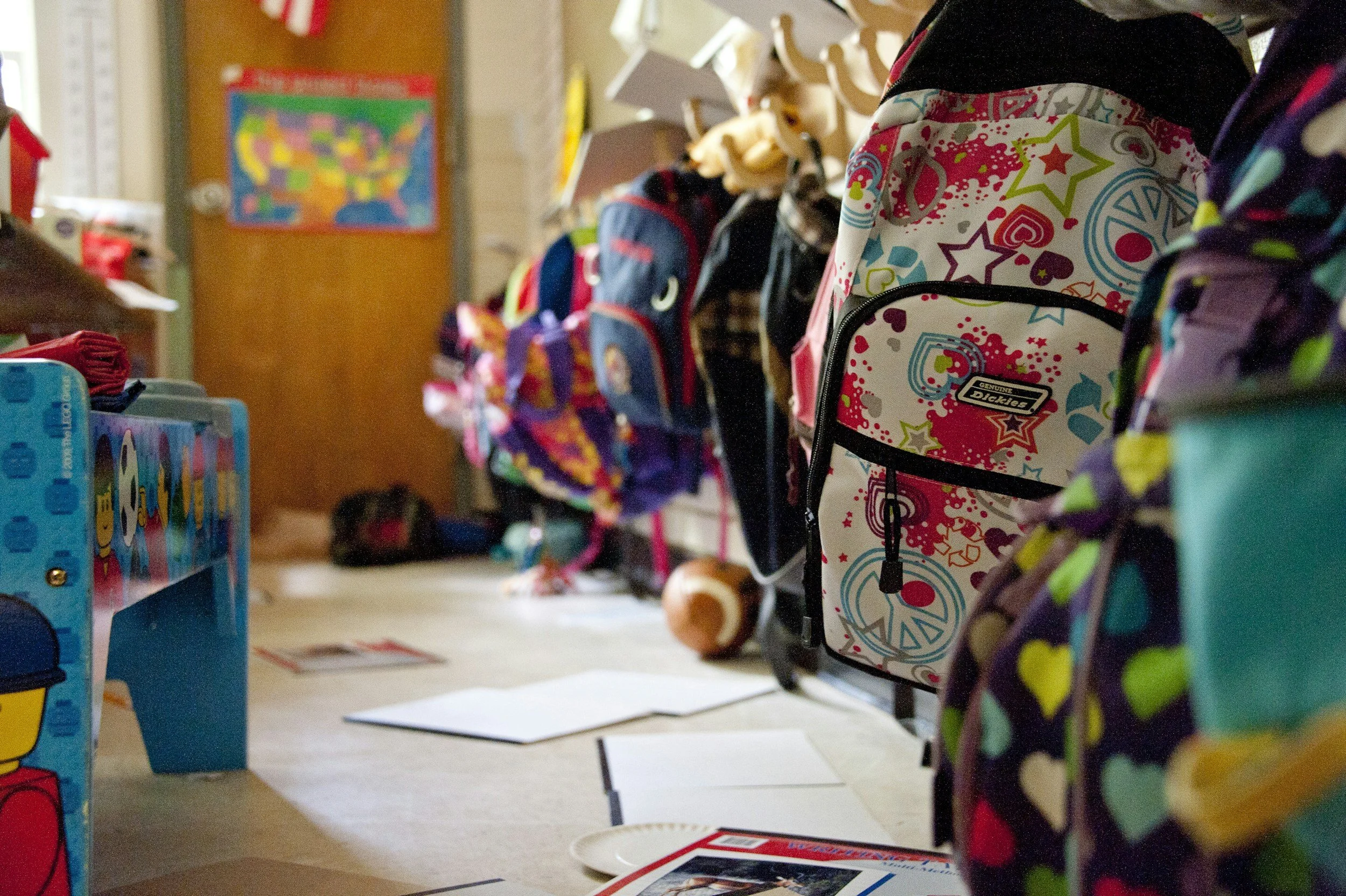
It happens every single day at roughly the same time. The door opens, the backpack lands wherever it lands, the shoes come off in the middle of the floor, the lunchbox gets set on the counter or the couch, or the stairs and within four minutes the entryway that was perfectly functional this morning looks like a small explosion went off.
Welcome to the after-school dump zone. Every family has one. Most of them are in exactly the wrong place. The good news: this is one of the most solvable problems in a family home. It doesn't require a renovation or a Pinterest-worthy mudroom. It requires understanding why the dump zone exists and designing around it instead of fighting it.
Why They Dump
Here's the thing about the after-school explosion. It's not laziness. It's physics. Kids come through the door carrying things, and they put those things down at the first available surface. Whatever is closest to the door, at the right height, with the least friction. That's where everything lands.
If your entryway doesn't have a designated spot for backpacks, shoes, and lunchboxes, kids will create one. Usually on the floor. Usually in the way. The solution isn't stricter rules or more reminders. It's designing a space where the right behavior is the easiest behavior.
When the hook is right there at the right height, the backpack gets hung. When the shoe bin is right inside the door, the shoes go in. When the lunchbox has a landing spot near the kitchen, it gets there. Proximity and ease do the work that nagging never quite manages.
Build It Right
You don't need a mudroom. You need a few well-placed elements that work together:
A hook for every person. Not a shared hook. Not a hook that's technically available but always buried under someone else's coat. One dedicated hook per family member, at the right height for each kid. Labeled if it helps. This single change eliminates more backpack-on-the-floor situations than anything else.
A shoe solution near the door. A bin, a tray, a low shelf. Something that contains the shoes and defines where they live. It doesn't need to hold every pair. Just the ones being worn regularly right now. Seasonal shoes live somewhere else.
A lunchbox landing spot. Ideally in or near the kitchen so the transition from drop-off to unpack is easy. A small bin or a designated shelf spot works. The goal is that the lunchbox goes directly there and gets emptied before homework or snacks not discovered the next morning with Tuesday's sandwich still inside.
A spot for papers and permission slips. A simple inbox tray or a designated folder on the counter captures the daily paper flood before it spreads across every surface in the house. One spot, one habit, sorted once a day.
A charging station. If your kids have devices, a designated charging spot in a common area not bedrooms keeps devices contained, charged, and out of the sleep space. Built into the drop zone, it becomes part of the after-school routine naturally.
Keep It Simple
Even the best physical setup needs a simple routine behind it. For most families, the after-school sequence looks something like this:
Backpack on the hook
Shoes in the bin
Lunchbox to the kitchen
Papers in the inbox
Snack
That's it. Five steps, most of which take less than thirty seconds. The snack at the end is the built-in reward and for most kids, the motivation to move through the first four quickly.
The key is consistency, not perfection. A routine that happens eight out of ten days is infinitely better than a perfect system that collapses under any variation. Build in flexibility and the routine survives the hard days.
Be Honest
If your after-school drop zone has become a source of daily friction: reminders that don't land, stuff that migrates to every surface, a front entry that never quite recovers then it's worth stepping back and asking why.
Is the hook in the right place? Is it the right height? Is there too much competing for the same space? Is the lunchbox landing spot too far from the door to be realistic?
Small adjustments to the physical setup often solve what feels like a behavior problem. When the system fits the way your family actually moves, it starts working on its own.
Beat the Bell
The best time to set up or reset your drop zone is before the school year starts not two weeks in when the habits have already formed around whatever was there. A few days before the first day, walk through the space with fresh eyes. Clear what doesn't belong, add what's missing, and involve your kids in the setup.
A system they helped create is one they're more likely to use. At Signature Organizing, entryways and drop zones are some of our favorite spaces to work on. The impact is immediate and felt every single day. If yours needs a reset before the school year hits, we'd love to help. Get in touch to get started.

Jessica is the founder of Signature Organizing, a Professional Home Organizing Business in Washington (servicing the greater Eastside and Seattle area). She loves transforming chaos into functional spaces and is known for bringing creative solutions to improve the quality of life for her clients. She shares her tips and tricks on Instagram @signatureorganizing