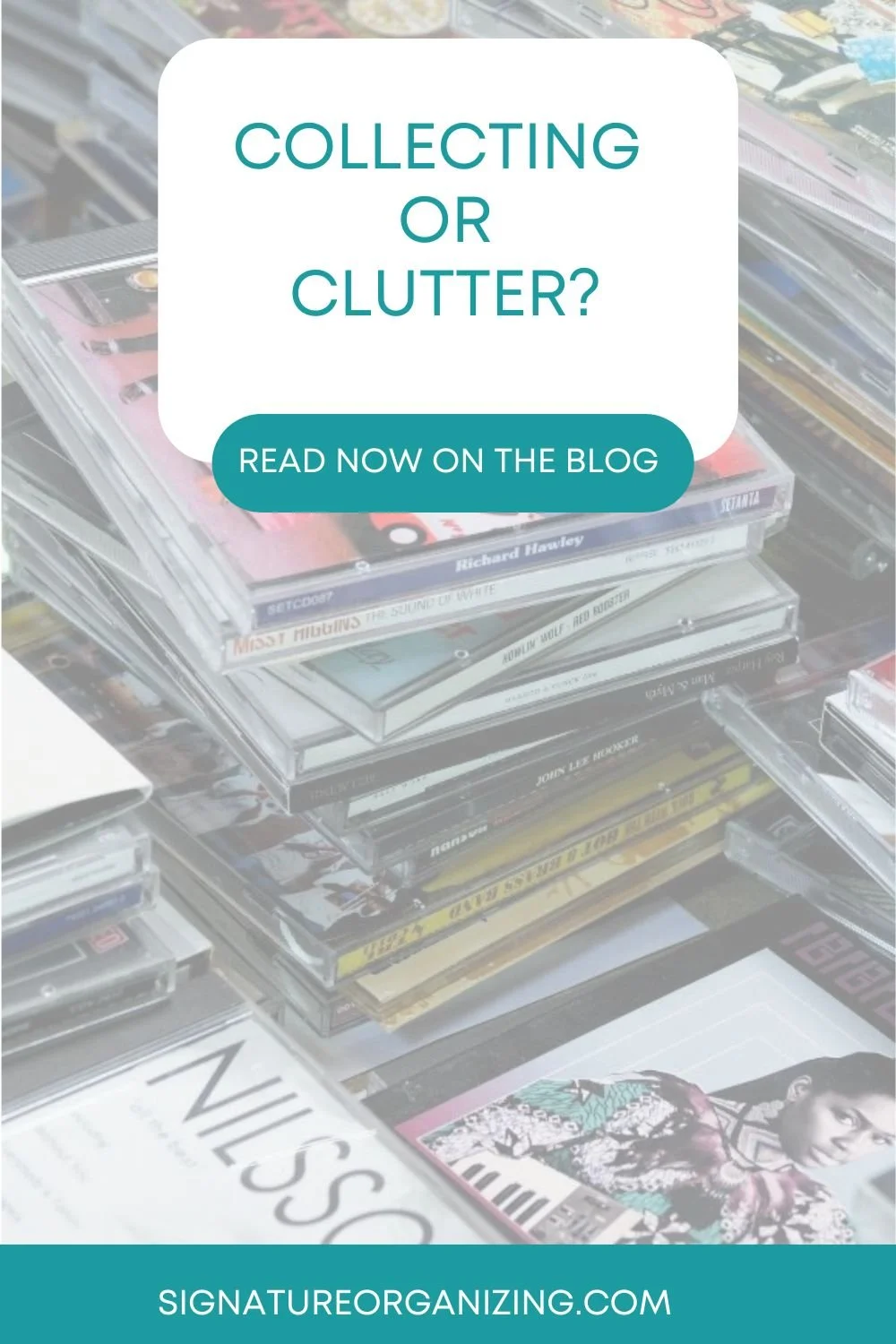
Collecting or Clutter?

Most homes have at least one bin filled with old technology—CDs, burned mix discs, cassette tapes, early digital cameras, old iPods, chargers that may or may not belong to anything anymore. These items often live in storage because they’re hard to categorize. They aren’t useful day to day, but they feel personal.
I still have my CD collection. Many of them were burned years ago—legally questionable, impossible to replace, and worth absolutely nothing in resale value. I don’t even own a CD player anymore, and new cars don’t even come with them. And yet, getting rid of them doesn’t feel simple.
This is where decluttering becomes more nuanced than just “keep or toss.” As a professional organizing service, I see this often with clients. Old technology sits right at the intersection of memory, practicality, and clutter. Deciding what stays isn’t about rules—it’s about intention.
When Nostalgia Meets Clutter
Not everything we keep needs to earn its place through daily use. Emotional value matters. But clutter builds when nostalgia turns into obligation.
A helpful question I often ask clients is: does this item add meaning to your life now, or does it simply represent the past?
There’s nothing wrong with holding onto memories. The challenge comes when we keep entire collections without a clear purpose—especially when those items no longer fit how we live.
Digital cameras are a great example. They’re making a comeback with kids right now, and part of me wishes I still had mine. But wishing I had it is different from needing to store one indefinitely “just in case.”
Replaceable vs. Irreplaceable
One of the most useful frameworks in home organizing is understanding what’s replaceable—and what isn’t.
Some items truly can’t be replaced:
burned CDs
old playlists
home videos or photos stored on outdated devices
Others feel important but are easily replaceable if needed:
basic cameras
headphones
old accessories
Professional organizing isn’t about pushing clients to get rid of sentimental items. It’s about helping them distinguish between what’s irreplaceable and what’s simply familiar.
Usefulness Still Matters
Here’s the harder part: emotional value doesn’t eliminate practical considerations.
If you don’t own the equipment to use something—and haven’t for years—it’s worth pausing. Many organizing clients realize they’re storing items for a version of life that no longer exists.
Helpful questions include:
Do I have a way to use this today?
Would I notice if it were gone?
Would I keep all of it—or just a small portion?
Often, clarity comes from choosing a curated selection rather than keeping everything.
Collecting vs. Clutter
Collecting is intentional. Clutter is passive.
A collection:
is limited and purposeful
has a designated home
is chosen, not default
Clutter tends to:
grow without boundaries
live in random storage
carry guilt instead of meaning
There’s no universal line between the two. That line is personal—and it shifts over time. A professional organizing service helps clients identify where that line sits for them (and no, I won’t judge you for holding onto your N’SYNC albums, burned mix CDs, or that one collection you’re absolutely not ready to part with).
Embrace the Present, Not the Past
Home organizing works best when it supports how you live now. That doesn’t mean erasing memories—it means giving them appropriate space.
Many clients choose to:
keep a small, meaningful portion of a collection
digitize what they can
store sentimental items intentionally rather than as overflow
This approach honors the past without letting it dominate current space.
A Moment of Honesty
Even with experience and professional perspective, some decisions still take time.
Full transparency: I still haven’t decided what to do with my own CD collection. Part of me wants to toss it, part of me knows I’d probably be annoyed with myself later—and for now, it lives in a very large sleeve taking up prime real estate in my nightstand. Organizing isn’t about instant answers; it’s about being thoughtful, even when the decision isn’t final yet.
And that’s often where the real work happens—not in perfect outcomes, but in intentional ones.
Clarity Over Perfection
There’s no “right” amount of old technology to keep. The goal isn’t minimalism—it’s clarity.
Some people display their old tech like art—records on shelves, a vintage camera on a bookcase. Others store it neatly, or keep it tucked away in the attic for now. The question isn’t where it lives—it’s whether it feels intentional.
If something still adds meaning and has a place, keep it thoughtfully. If it’s quietly draining space and mental energy, it may be time to let it go.
A Personalized Approach Matters
No two households relate to clutter the same way. Some clients value memory heavily; others prioritize function. A personalized organizing approach respects both. Professional organizing isn’t about applying rigid rules. It’s about helping clients make thoughtful decisions, create sustainable systems, and feel confident in what they keep.
Clarity Over Perfection
There’s no “right” amount of old technology to keep. The goal isn’t minimalism—it’s clarity. If something still adds meaning and has a place, keep it intentionally. If it’s quietly draining space and energy, it may be time to let it go. Organizing isn’t about getting it perfect. It’s about creating a home that works for your life today.
If you’d like help sorting through sentimental items or creating systems that reflect how you live today, professional organizing support can make those decisions easier and lighter.
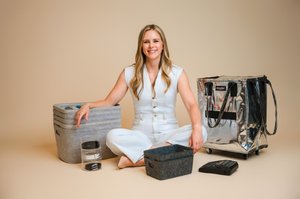
Jessica is the founder of Signature Organizing, a Professional Home Organizing Business in Washington (servicing the greater Eastside and Seattle area). She loves transforming chaos into functional spaces and is known for bringing creative solutions to improve the quality of life for her clients. She shares her tips and tricks on Instagram @signatureorganizing